Mojtaba Khamenei’s Inaugural Message: A Defiant Stand Amidst Chaos
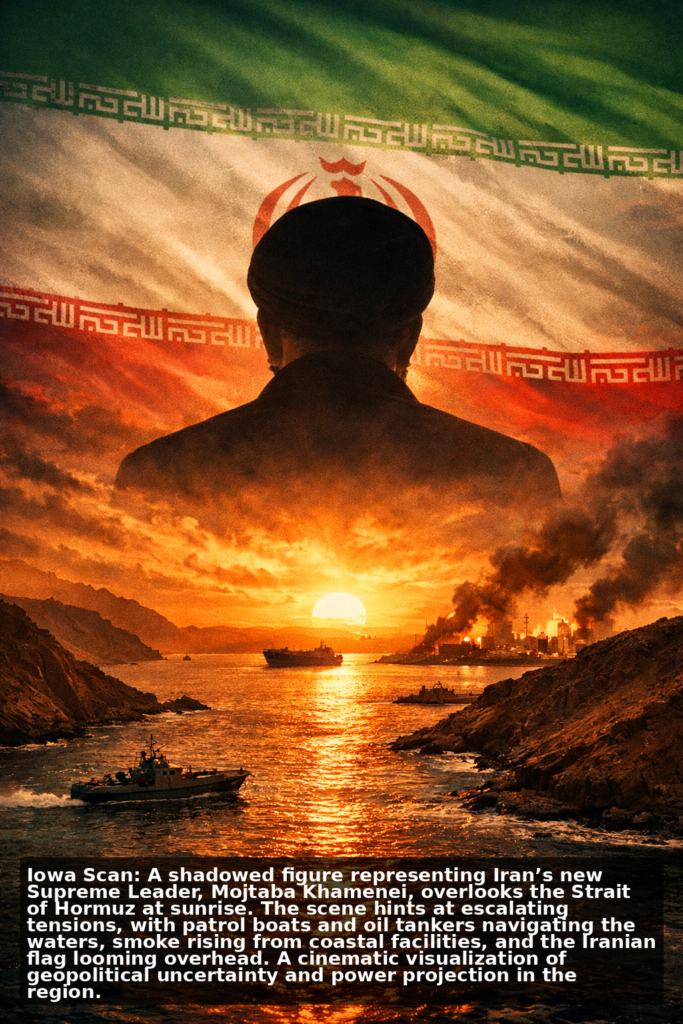
Introduction to Mojtaba Khamenei
Iran’s new supreme leader, Mojtaba Khamenei, has delivered his first public message since taking over following the death of his father, Ayatollah Ali Khamenei, in the opening strikes of the ongoing U.S.-Israeli conflict—and it’s a defiant one.
In a statement read aloud on Iranian state television on Thursday (March 12, 2026), rather than appearing in person or via video, the 56-year-old hardliner vowed that Iran would press on with the fight. He explicitly called for keeping the “Strait of Hormuz” closed as a key pressure tool against enemies, while promising continued attacks on U.S. military bases and assets across the region.
The message emphasized demanding compensation from the United States for damages inflicted during the war. If refused, Khamenei warned, Iran would retaliate by destroying equivalent American assets. He framed the stance as a commitment to avenging the “blood of the martyrs,” including those killed in recent strikes, and praised the Iranian people for rallying in support of the regime amid internal tensions.
Notably absent was any direct address from Khamenei himself—no live speech, no video appearance, just a written text narrated by a state TV anchor, often accompanied by a still photo of him. This has only fueled widespread speculation about his health and whereabouts. Reports from the early days of the conflict suggested he may have been injured in the same attack that killed his father and other family members, and skeptics continue to question whether he’s truly in control or even alive.
Described as a staunch hardliner with close ties to the **Islamic Revolutionary Guard Corps (IRGC)**, Mojtaba Khamenei has long operated behind the scenes in Iranian politics. This inaugural statement offers the first real glimpse into his approach: unyielding on core policies, focused on military resistance, and showing little sign of softening internal divisions or seeking de-escalation. He made a point of acknowledging public support, highlighting “magnificent assemblies” where people reaffirmed loyalty to the system.
The timing comes amid escalating regional fallout from the war, including Iran’s effective blockade of the Strait of Hormuz—a critical chokepoint for global oil shipments—driving up energy prices and drawing sharp international concern. The message signals no immediate retreat from that strategy or from targeting U.S. forces and allies in the Gulf.
For now, the lack of visual or audio proof from the new leader himself leaves many observers unconvinced, turning what was meant as a show of strength into yet another layer of uncertainty in an already chaotic conflict.
Mojtaba Khamenei, born in 1969, is the youngest son of Ayatollah Ali Khamenei, the previous Supreme Leader of Iran. Following the passing of his father, Mojtaba has emerged as a significant figure in the Iranian political landscape, indicating a potential shift in the governance of the nation. Initially educated in religious schools within Qom, Mojtaba has combined traditional Islamic teachings with modern political strategies, which has influenced his approach to leadership. His ascent to power highlights the dynastic nature of Iranian politics while showcasing the importance of legacy within the context of the Islamic Republic.
Throughout his career, Mojtaba has been involved in various political roles, primarily within the Islamic Revolutionary Guard Corps (IRGC) and the Assembly of Experts. His background in security and military affairs has granted him a unique perspective on Iran’s tumultuous geopolitical situation. As tensions escalate between the U.S. and Israel, his position may play a pivotal role in shaping Iran’s response to external threats, especially concerning regional stability and national sovereignty. His staunch advocacy for the Palestinian cause resonates deeply within a domestic context marked by widespread anti-Western sentiment.
Upon taking on the mantle of leadership, Mojtaba’s inaugural message was anticipated across the international community, particularly given the fraught state of Iranian relations with global powers. His comments not only reflect an adherence to the principles espoused by his father but also serve as a clarion call to both supporters and detractors in light of the ongoing U.S.-Israeli conflict. This context underscores the significance of his words as a new chapter in Iranian governance begins. The implications of his leadership style and political strategies remain to be seen, yet his first public address stands as a testament to his resolve amidst a backdrop of chaos.
The Context of the Message
Mojtaba Khamenei’s inaugural message arrives amid a backdrop fraught with tension and uncertainty, both domestically and internationally. This period has been particularly challenging for Iran, marked by the recent death of his father, Ayatollah Ali Khamenei, who served as the Supreme Leader for over three decades. The passing of such a central figure in Iranian politics has inevitably created a vacuum, prompting speculation regarding leadership succession and the future direction of the country. The timing of Mojtaba’s message serves not only as a personal declaration but also as a crucial signal to both domestic audiences and the international community.
Compounding the situation is the ongoing conflict between the United States and Israel, which has intensified tensions throughout the Middle East. These geopolitical dynamics are significant, as they pose direct challenges to Iran’s security and strategic interests. Iran’s opposition to U.S. influence and its unwavering support for groups like Hezbollah and Hamas underline its regional ambitions and commitment to resistance. The increased hostilities illustrate the complexities of regional alliances and enmities, placing Iran in a precarious position.
In this context, Mojtaba Khamenei’s message can be interpreted as a defiance against perceived threats, both from external powers and internal dissent. His communications often aim to bolster national unity in times of chaos, especially when heightened militaristic rhetoric can galvanize public sentiment. In light of the fluctuating geopolitical landscape and the potential for further conflict, his address seeks to reinforce Iran’s stance against foreign pressures, while also navigating the sensitivities arising from his father’s legacy. Thus, the message emerges not only as a political note but as a pivotal moment that encapsulates the challenges faced by Iran at this juncture.
Key Themes from the Message
Mojtaba Khamenei’s inaugural message encapsulated several key themes that underscore his political stance and intentions moving forward. Notably, he emphasized a commitment to military resistance against perceived threats, particularly from the United States and its allies. This military resolve is positioned as a core principle of his leadership, highlighting a determination to safeguard national sovereignty amid regional turmoil.
One of the central themes of Khamenei’s discourse was the continuation of warfare as a legitimate means of asserting Iran’s power and influence in the region. He framed this approach as a necessary strategy to counteract the geopolitical maneuvers of adversaries, clearly indicating a preference for an aggressive posture rather than diplomatic negotiations. This rhetoric suggests that the current leadership will actively pursue military options, thereby escalating tensions in already volatile areas.
Additionally, Khamenei’s message included a pointed call to action regarding the Strait of Hormuz, a critical maritime chokepoint for global oil supply. His insinuation that closing the Strait could be a tactic employed by Iran highlighted a willingness to exert leverage over international oil markets as a form of resistance. Such threats reinforce the notion that the Khamenei administration may employ direct actions that could destabilize the region further.
Furthermore, the commitment to retaliate against American assets underscores a belligerent stance and shows a disregard for the potential repercussions of escalating military confrontation. This unwavering position against the U.S. is indicative of a broader strategy aimed at consolidating internal authority while rallying support among hardline factions within Iran. Thus, these themes collectively demonstrate Khamenei’s intent to navigate the complexities of international relations through a lens of strength and defiance.
In recent weeks, the political landscape surrounding Mojtaba Khamenei has been rife with speculation regarding his health and his ability to maintain control over the Iranian government. Reports indicate that Khamenei has sustained injuries during various conflicts, leading to concerns about his capability to effectively lead and govern. The lack of a live address, a traditional platform for conveying important messages to the public, has further exacerbated doubts about his role in the leadership hierarchy.
The implications of these speculations are significant. Absence from public engagement can suggest a weakening political hold, an aspect that could inspire both dissent and questions regarding the continuity of leadership within the regime. This has raised eyebrows among political analysts who are closely monitoring the situation. The perceived decline in Khamenei’s health may not only raise alarm within the ruling elite but could also lead to a scramble for power among potential successors. Such a power vacuum might destabilize the current government, creating opportunities for both internal factions and external adversaries to assert influence.
This scenario leads to a broader inquiry about the operational dynamics within the government. If Khamenei’s ability to lead is indeed compromised, it raises concerns about who is actually making decisions on critical state issues. The speculation points to a potential shift in power, where advisors or other high-ranking officials may start to exert greater influence in the absence of direct leadership from Khamenei. As this situation develops, the need to robustly evaluate the implications of Khamenei’s health and perceived control becomes increasingly crucial for understanding the future trajectory of Iran’s governance.
Public Support and Internal Divisions
Mojtaba Khamenei’s recent inaugural message highlights a central theme of public support for the regime amid a backdrop of political turbulence and dissent. In his address, Khamenei underscores the importance of loyalty among the Iranian populace, an element he perceives as critical to safeguarding the existing power structure. His insistence on the necessity of public backing aligns with the regime’s longstanding narrative that portrays itself as the legitimate guardian of national interests against external adversities.
However, Khamenei’s acknowledgment of public support does not exist in a vacuum; it is set against the reality of increasing internal divisions within Iran. The prevailing socio-political landscape reveals a populace grappling with economic grievances, demands for greater freedom, and a desire for reform. These factors contribute to a sense of disillusionment among various segments of society, particularly the youth and urban populations who feel marginalized by the current governance. Khamenei’s message seemingly aims to galvanize a sense of unity, yet it begs the question of whether such rhetoric can genuinely resonate with an increasingly fragmented citizenry.
Critically, Khamenei’s emphasis on loyalty and public support may inadvertently highlight the very divisions he seeks to bridge. By framing dissenting voices as unpatriotic or counterproductive, he risks alienating those who are already skeptical of the regime’s intentions. Instead of fostering a cohesive national identity, his address could serve to further entrench existing rifts. As the Iranian populace continues to navigate their relationship with authority, the challenge remains whether Khamenei’s defiance and call for unity will translate into a more inclusive dialogue or merely reinforce the barriers between contrasting ideological factions.
Iran’s Strategy in the Strait of Hormuz
The Strait of Hormuz is widely recognized as a critical chokepoint for global oil trade, with nearly a fifth of the world’s crude oil passing through this narrow waterway. Controlling access to the Strait is, therefore, of paramount strategic importance for Iran, both economically and militarily. In light of this, Mojtaba Khamenei’s recent inaugural message underscores Iran’s firm stance on defending its interests in the region, which directly corresponds with the country’s broader military agenda amidst escalating tensions with the U.S. and its allies.
Iran’s military strategy in the Strait of Hormuz encompasses a range of operations and maneuvers designed to secure its maritime border while also projecting power. The Islamic Revolutionary Guard Corps (IRGC) plays a crucial role in this strategy, with naval units prepared to execute operations that could potentially disrupt shipping lanes in the event of a conflict. This readiness reflects Iran’s emphasis on deterrence, aiming to convey to potential adversaries that any military action would be met with a robust response.
Mojtaba Khamenei’s message aligns with this defensive posture, signaling Iran’s determination to maintain control over this key maritime corridor. The country has invested significantly in its naval capabilities, developing advanced missile systems and utilizing asymmetrical warfare tactics to safeguard its interests. Furthermore, amidst the ongoing U.S.-Israeli conflict, Iran leverages its strategic position as a means of asserting influence over the region. This highlights how the Strait of Hormuz is not only a vital economic lifeline but also a crucial element of Iran’s geopolitical strategy.
In conclusion, Iran’s strategy in the Strait of Hormuz remains centered around maintaining a strong military presence and exerting control over maritime routes, aligning its defense policies with the broader context of regional tensions. This approach not only protects its economic interests but also serves as a statement of defiance against external pressures.
International Reaction and Concerns
Mojtaba Khamenei’s inaugural message has elicited a range of responses from the international community, reflecting deep concerns over his assertive rhetoric. Analysts and leaders worldwide have scrutinized his defiant stance, interpreting it as a signal of ongoing tensions within the region. The implications of his words extend beyond mere political dynamics; they raise alarms about potential escalation in conflicts that could disrupt the already fragile balance of power.
Global leaders have expressed apprehension regarding the consequences of Khamenei’s message on international relations, particularly concerning energy markets. Iran’s pivotal role in oil and gas supply chains means that any rhetoric promoting hostility could lead to spikes in energy prices. Countries dependent on Iranian oil are watching closely, fearing that increased tensions may lead to supply shortages and economic repercussions on a broader scale. As a result, diplomatic efforts to stabilize the region and mitigate volatility are more crucial than ever.
The message has also sparked discussions among analysts regarding the overall stability of the Middle East. There are warnings that if Khamenei’s confrontational approach is not countered diplomatically, it could lead to a resurgence of conflicts in war-torn areas, further exacerbating humanitarian crises. Many see this as a critical moment for negotiations, emphasizing that the international community must address underlying grievances rather than allowing rhetoric to dominate discourse.
In summary, the international reaction to Mojtaba Khamenei’s inaugural message underscores a growing alarm over potential geopolitical instability, particularly in relation to energy security and regional peace. The consensus among experts is clear; proactive diplomatic engagement is necessary to avert any escalating conflicts that could arise from this defiant stance.
Long-Term Implications for Iranian Policy
Mojtaba Khamenei’s inaugural message signals a pivotal moment for Iran’s foreign and domestic policies. His resolute stance amidst escalating chaos is expected to shape the trajectory of Iranian political strategies in significant ways. As we analyze the potential long-term implications of Khamenei’s leadership, it becomes imperative to consider how his commitment to a defiant posture might impact Iran’s relationships with both neighboring countries and global powers.
One likely outcome of this approach is a reinforcement of Iran’s existing alliances, particularly with nations that share similar perspectives on U.S. policies. This could lead to a consolidation of partnerships with groups and states that oppose Western influence in the region, effectively positioning Iran as a leading player in a more polarized Middle East. Moreover, with regional tensions at an all-time high, Khamenei’s administration may adopt a more aggressive stance toward rivals, further entrenching the conditions for sustained conflict and fragmentation in diplomatic relations.
In the realm of domestic policy, Khamenei’s unwavering position could galvanize nationalist sentiments, potentially rallying public support around his government. Such a response may result in a decrease in internal dissent, as citizens unite against perceived external threats. However, it could also escalate dissent from factions within the country that view his aggressive foreign policy as detrimental to national interests and economic stability. Ultimately, balancing external defiance with internal cohesion will be a significant challenge for Khamenei.
In light of the current geopolitical landscape, the implications of Khamenei’s leadership could redefine not only Iran’s strategic priorities but also the dynamics of power in the region. The relationships that Iran cultivates in upcoming years may position it as either a marginalized state or a formidable power broker in the Middle East, contingent upon how Khamenei navigates this complex web of international relations.
Conclusion: An Uncertain Future
The recent inaugural message from Mojtaba Khamenei marks a significant moment in Iran’s political landscape, adorned with defiance and undercurrents of chaos. His stance signals a commitment to uphold the values instilled by his predecessor while navigating complex challenges that lie ahead. The potential for a shift in Iran’s approach, particularly in relation to regional alliances and global diplomacy, becomes ever more palpable in light of his declarations. Observers have noted that Khamenei’s rhetoric seems designed to resonate with hardline factions, ensuring loyalty amidst a backdrop of international scrutiny.
With ongoing domestic unrest and heightened external pressures, the future under Mojtaba Khamenei is fraught with unpredictability. This uncertainty is compounded by the delicate balance Iran must strike between asserting its sovereignty and responding to the demands of a constantly evolving geopolitical landscape. The implications of his leadership extend beyond Iran’s borders, as regional stability hinges on the decisions made within its corridors of power.
As stakeholders in Iranian affairs—including foreign governments, regional actors, and civil society—continue to monitor Khamenei’s actions closely, it becomes evident that understanding the nuanced dynamics at play is critical. The complexity surrounding Iran’s position in the global arena requires vigilance, as each policy decision reverberates across areas such as security, economy, and human rights.
In conclusion, while the inaugural message from Khamenei sets a tone of defiance, the uncertain future for Iran under his leadership invites caution and ongoing observation. The evolving situation demands a nuanced approach from international observers, who must remain engaged and vigilant as Iran navigates its path in a tumultuous world.