France’s 70,000-Officer Saturday Deployment: Security, Protest and Public Tensions
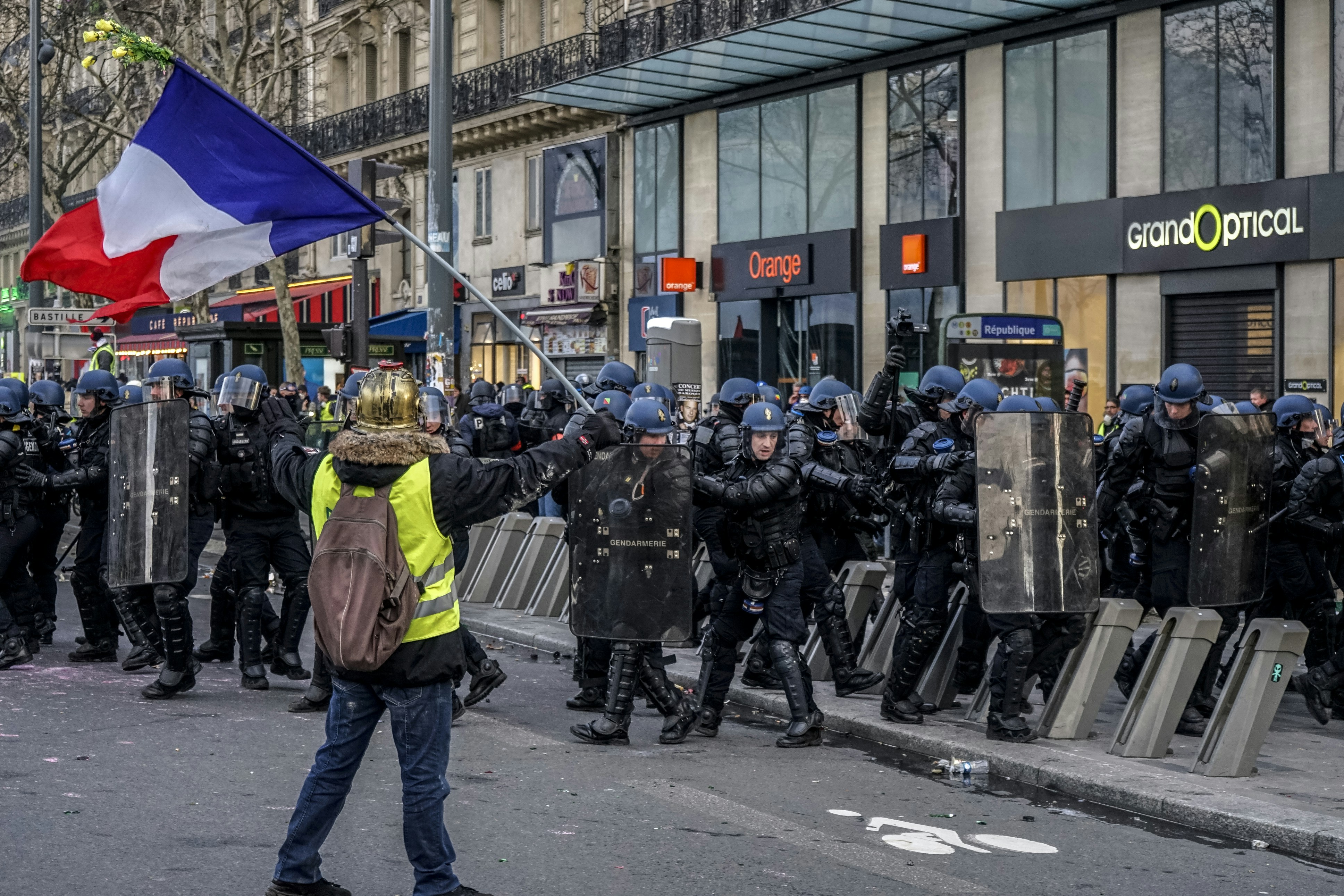
Reports that French authorities plan to deploy around 70,000 police officers across France on Saturday have placed security preparations at the center of public attention. The figure describes a nationwide operation rather than a force assigned to one city or a single gathering. Its scale indicates that officials are preparing for the possibility of disruption and want personnel available to respond quickly if circumstances require it. It does not establish that disorder is expected everywhere, or that demonstrations themselves will be violent. Authorities have presented the deployment as preventive, intended to maintain public order and protect people and property.
The reported timing is Saturday, and the stated geographic scope is the country as a whole. Beyond those broad points, important operational details have not been specified in the available account. It does not identify how officers will be distributed among regions, which locations may receive the largest contingents, or whether the total includes particular specialist units. Nor does the reported figure, by itself, explain the precise intelligence or assessments behind the plan. These distinctions matter: a nationwide staffing total signals preparedness, but it is not a detailed map of likely protest activity or a prediction of events in each community.
Large deployments are commonly used to ensure that authorities can manage crowds, keep routes accessible and intervene if isolated incidents arise. Their presence may also be intended to reassure residents and safeguard essential services. At the same time, the number of officers should not be treated as evidence that violence is inevitable. Public demonstrations vary in size and character, and most participants may gather without serious incident. The stated purpose of this operation is to prevent unrest and support public safety; how resources are ultimately used will depend on conditions on the day. Further confirmed information about local arrangements would help clarify how the national plan translates into practice.
The previous weekend’s demonstrations were organized around concerns over the cost of living, bringing public protest into a tense national debate about prices, household pressures, and the government’s response. The report describes some of the worst street violence seen in France for years, but places that violence on the fringes of the protests. That distinction matters: it does not say that the demonstrations as a whole were violent, nor that participants generally engaged in disorder. Rather, it presents protest activity and incidents around its edges as related events that should not be treated as interchangeable. The available account offers a broad characterization of the weekend, not a detailed chronology of every gathering or confrontation.
The description of violence at the edges indicates that disorder occurred in the wider setting of the demonstrations, rather than establishing that it defined the demonstrations themselves. Cost-of-living grievances and public assembly formed the protest context; street violence is reported as a separate feature of events around that context. Keeping those points distinct avoids attributing the actions of some people, or incidents in nearby areas, to all demonstrators. It also reflects the limits of the report: it characterizes the severity of the violence in broad terms, without supplying enough detail to establish exactly how each incident related to a particular march or gathering.
The account does not provide a full breakdown of where the incidents occurred, how many people were injured or arrested, or the extent of any property damage. It therefore cannot support more specific claims about the scale, geographic spread, or consequences of the disorder. Nor does it identify individual groups or explain the circumstances of particular confrontations. Those details should not be inferred from the general description alone. The safest reading is that cost-of-living demonstrations took place over the weekend and that serious violence was reported around their fringes, while the available information leaves important questions about locations and outcomes unanswered.
In the reported backdrop to the demonstrations are concerns about the rising cost of everyday life in France. Higher household expenses, including food, energy, housing and transport, can place pressure on budgets and make economic insecurity more visible. When people feel that wages or public support are not keeping pace with prices, routine choices may become difficult, especially for households with limited savings. Such pressures can add to frustration and contribute to a sense that political leaders are not responding adequately. They help explain why questions of affordability and living standards may surface prominently during public gatherings and protests.
A demonstration can bring together people with different experiences, priorities and political views. Some participants may be focused on prices and household finances; others may be motivated by wider concerns about public services, taxation, employment, inequality or the conduct of government. Even where cost-of-living pressures form part of the reported setting, it would be inaccurate to assume that every person in a crowd shares one grievance, belongs to the same movement or seeks the same policy outcome. Public events are often heterogeneous, and individual motives may overlap or differ. Distinguishing between a broad social context and the aims of particular participants is important when describing the protests.
Economic pressures can help explain why public frustration grows, but they do not by themselves establish why any specific incident occurred. The circumstances surrounding clashes or damage may involve separate decisions, immediate events and interactions among people present. Accordingly, the rising cost of living is best treated as part of the wider context in which demonstrations are reported, not as a proven sole cause of violence. This distinction also matters when considering the deployment of police officers: security arrangements address public-order risks, while underlying economic concerns may prompt calls for political attention or policy changes. Describing both dimensions without treating a diverse crowd as a single group provides a more measured account of the unrest and its setting.
The scale of the planned Saturday deployment appears to reflect a precautionary approach shaped by the previous weekend’s disorder. Officials have indicated that a substantial police presence is intended to reduce the likelihood of a repeat and to ensure that officers can respond quickly if incidents arise. In this context, deploying personnel across locations is a visible way to reinforce readiness before crowds gather. It does not, by itself, demonstrate that authorities expect violence everywhere or that a specific incident is certain. Rather, it signals that officials are treating the possibility of renewed disorder as a factor in their planning.
Recent violence can influence crowd-management decisions in several ways. Experiences from a previous gathering may lead planners to prepare for faster changes in crowd behavior, possible confrontations, or pressure on public order resources. A larger deployment can provide more capacity to monitor developing situations, separate groups where necessary, protect public spaces, and assist people affected by incidents. It may also allow authorities to move personnel toward emerging problems without relying solely on a small number of teams. These are general functions associated with preparedness; the available information does not establish which measures will be used on Saturday or how officers will be positioned.
At the same time, the stated rationale should be distinguished from claims about intelligence. The source information does not identify threats, disclose intelligence assessments, or describe operational triggers that would prompt a change in the response. It therefore supports a conclusion: officials are seeking to deter a recurrence of recent disorder and to have resources available for a rapid response. The size of the deployment may also shape public perceptions, reassuring some residents while prompting concern among others about tensions, disruption, or the management of demonstrations. Its effectiveness will depend on how circumstances develop and how the presence is experienced.
A nationwide police deployment can encompass a range of responsibilities, depending on the circumstances and the instructions given to authorities. In general, officers may be assigned to help maintain public order, protect people and property, and provide a visible presence in areas where large gatherings are expected. Their work can also include assisting members of the public, responding to incidents, and coordinating with other emergency services. These are examples of duties that large deployments can involve; they should not be taken as confirmation of the specific tasks planned for this operation.
Where demonstrations or other gatherings take place, police work may include monitoring crowds, keeping routes and access points clear, and responding if safety concerns arise. Officers may also be tasked with managing movement around busy public spaces or protecting locations considered sensitive. The appropriate approach can vary according to local conditions, the size and character of gatherings, and assessments made by the relevant authorities. Without further operational information, it is not possible to say which of these measures will be used in any particular place on Saturday.
The report provides an overall figure of 70,000 officers for the nationwide deployment, but does not explain how that total will be distributed across France. It does not specify which police or other security units will take part, how many officers may be assigned to particular cities or events, or what tactics they may use. Nor does the headline figure alone establish where personnel will be stationed or what contingencies they are expected to address. Those details would be necessary to describe the operation more precisely. Accordingly, general descriptions of crowd management, public-order duties, property protection, or emergency response should be understood as possible functions of a large deployment, not confirmed elements of the plan reported here.
Authorities organizing large demonstrations face a dual responsibility: reducing the risk of violence and protecting the public’s ability to assemble and express dissent. Public safety measures can help keep participants, passersby, transport services and nearby businesses safe, particularly when crowds are large or tensions are elevated. Clear routes, trained officers, accessible medical support and communication with event organizers may help manage a gathering without unnecessarily restricting it. The purpose of security planning is not simply to control a crowd, but to make it possible for people to exercise their rights while limiting foreseeable harm.
A visible police presence can reassure residents and business owners who are concerned about disorder, damage or disruption. Officers may also be able to respond quickly if a situation becomes dangerous. At the same time, a substantial deployment can feel intimidating to demonstrators and may prompt questions about how force will be used, whether people can move freely, and how journalists and legal observers will be treated. The perception of policing matters: an approach viewed as excessive or indiscriminate can deepen mistrust, discourage participation and intensify tensions rather than ease them.
Balancing these interests requires measures that are necessary, proportionate and attentive to civil liberties. Restrictions on movement or assembly should have a clear public-safety basis, while peaceful participants should not be treated as responsible for the actions of others. Transparent instructions, identifiable officers, de-escalation practices and accountability for misconduct can help sustain public confidence. These are broader principles relevant to major demonstrations; they should not be read as claims about the conduct, intentions or likely effects of any particular Saturday operation. Assessing a specific deployment would require reliable details about its planning and implementation. In general, effective security is strongest when it protects people from harm while preserving space for lawful protest and public debate.
A large police deployment can change the experience of attending a demonstration even when no particular restrictions have been confirmed. Visible officers, security checks, or instructions from authorities may affect how people approach a gathering and how long it takes to reach a meeting point. Organizers and participants may need to allow additional time, follow updates closely, and remain prepared for plans to change. These are potential effects of heightened security, not confirmation that any specific measure will be used.
Residents and people working near demonstration routes or gathering places may also notice changes to their daily routines. Movement through public spaces could become slower if crowds build or if police direct people away from an area. Access to homes, workplaces, shops, and transport connections may be affected by local circumstances, but no particular road closures, access limits, or transport changes should be assumed without an official announcement. People with appointments or time-sensitive commitments may wish to check reliable local information before setting out.
Businesses may need to consider how a busy public gathering could influence customer access, deliveries, staffing, and operating hours. The extent of any effect would depend on where events take place and how the situation develops; a substantial deployment alone does not establish that businesses will face disruption. Clear, timely communication from public authorities, transport providers, organizers, and local services can help everyone make informed decisions. Information should distinguish confirmed arrangements from possibilities, identify when and where advice applies, and be updated as circumstances change. Protesters, nearby communities, and employers can then respond proportionately, without relying on rumors or treating speculative restrictions as settled facts.
Reliable reporting on Saturday’s events should begin with basic confirmation of where and when demonstrations are scheduled, and whether they proceed as anticipated. Plans announced in advance may change because of weather, local decisions, organizers’ choices, or operational restrictions. Coverage should distinguish between an announced gathering and one that is actually underway, while identifying the locations involved and the timing of any reported developments. Updates from local authorities, organizers, and reporters on the ground can help establish what is happening without treating early estimates as settled facts. Readers should also note whether reports concern one site or multiple areas.
Any account of incidents should specify what is known, where it occurred, and whether independent confirmation is available. Initial descriptions can be incomplete, and details may be revised as witnesses are interviewed or official records become accessible. Reporting should make clear whether an incident is confirmed, under investigation, or based only on an unverified claim. The same care applies to arrests and injuries: figures should be attributed to a named source, tied to a stated time, and updated when better information emerges. Where accounts differ, reliable coverage should explain the discrepancy rather than imply certainty or repeat speculation as fact.
Authorities’ description of the operation may clarify its stated purpose, command arrangements, deployment decisions, and any changes during the day. Readers should distinguish official explanations from independent assessments, and look for specific information rather than assurances or claims. Reports of disruption should identify the affected transport links, public services, businesses, or sites, and indicate whether interruptions are confirmed and how long they last. Because events can develop quickly, timestamps and sourcing matter: a post or headline shared may no longer reflect the situation. Readers can check several outlets and official updates, while remaining cautious about unsourced images, figures, and messages circulating.
The planned deployment of 70,000 officers across France is more than a large-scale security operation. It reflects the challenge of responding to public anger rooted in economic pressures while preserving the right to demonstrate. When household costs, employment concerns, or dissatisfaction with government decisions fuel mobilization, visible policing may reassure some residents, yet it can also shape how protesters experience the streets and how the public interprets the state’s response.
Assessing the operation will therefore require looking beyond whether serious violence occurs. Preventing injuries, protecting people and property, and keeping access routes open are important measures, but they do not by themselves establish whether the response has been balanced. Relevant questions include whether peaceful gatherings can proceed, whether officers distinguish nonviolent participants from individuals committing offences, and whether force is used lawfully and proportionately. The conduct of demonstrators and the decisions made by authorities will both matter in evaluating events.
There is also a broader civic question: whether public concerns receive meaningful attention after the demonstrations. Security measures can manage immediate risks, but they cannot resolve the grievances that bring people into public spaces. Clear communication, accessible channels for dialogue, and serious consideration of protesters’ concerns may help prevent confrontation from becoming the only visible form of engagement. At the same time, the state has a responsibility to protect residents and maintain public order without treating dissent itself as a threat.
For now, the deployment should be viewed as a test whose outcome remains unknown. Its significance will depend on how effectively authorities safeguard public safety while enabling lawful assembly, and on what follows once the immediate operation ends. Reports of incidents, accounts from participants and residents, and any subsequent response to the issues raised will offer a fuller basis for judgment. This framework recognizes both the legitimate demand for order and the democratic importance of protest, without assuming in advance how Saturday will unfold or what conclusions the evidence will support.